

Beekeeping in Haiti: Changing Lives and Land
We all know how important bees are. They are the cornerstone of the natural world. Without pollinators like bees, we wouldn’t have many of the plants we see around us all day. Now think about the consequences of that: no flowers, no fruits, no vegetables.
In Haiti, like all places, bees are central to the ecosystem. But in a country where climate devastation has already taken its terrible toll, they’re all the more important.
In partnership with the Caribbean Biodiversity Fund and its Ecosystem-based Adaptation initiative, CORE has piloted and implemented several programs across southern Haiti to promote ecological stability and growth.
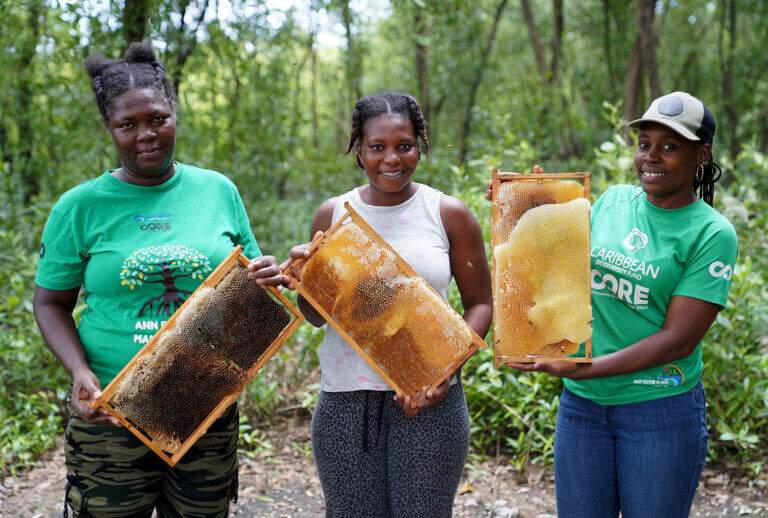
But at the heart of all our work are the people. One of our programs focuses on training locals in beekeeping best practices not only to help restore the ecosystem, but to help reinforce the local economy and community.
“We must not forget that without bees there is no life, because bees make it possible for trees to exist, and without trees there is no life,” said François Liné, a program participant.
For Francois, this program is providing not only a lifeline to the ecosystem, but to him as well. He is just one of 50 Haitians who took part in this incredible program.
Why Making Honey in Haiti Makes Sense
First off, honey in Haiti is in high demand. It can go for $75-$115 a gallon. And when each hive can make up to 8 gallons a year, that’s a good income, especially when the average Haitian earns $1,700 a year.
Second, Haiti provides the perfect climate for making honey. With year-round warmth and a tropical climate, crops can do well, and with crops and flowers to pollinate, the bees thrive.
What Does Beekeeping Training Look Like?
Our beekeeping training program is first and foremost hands-on. And there aren’t just lectures (though there are those too). Program participants get their hands dirty and learn directly from local experts on what works and how to best raise successful beehives in Haiti.
One day, the students learned how to make bee boxes, where the bee colonies call home. They were taught how to take measurements, cut the wood, and build each one. This is an invaluable skill that supports the long-term health of a beehive.
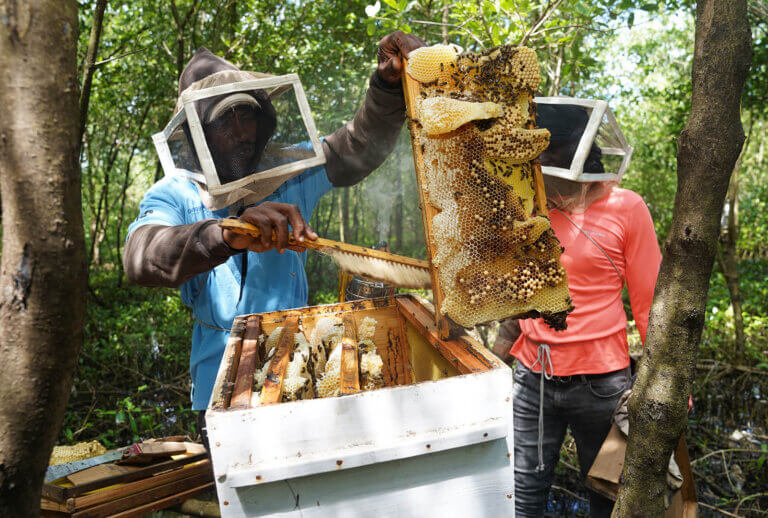
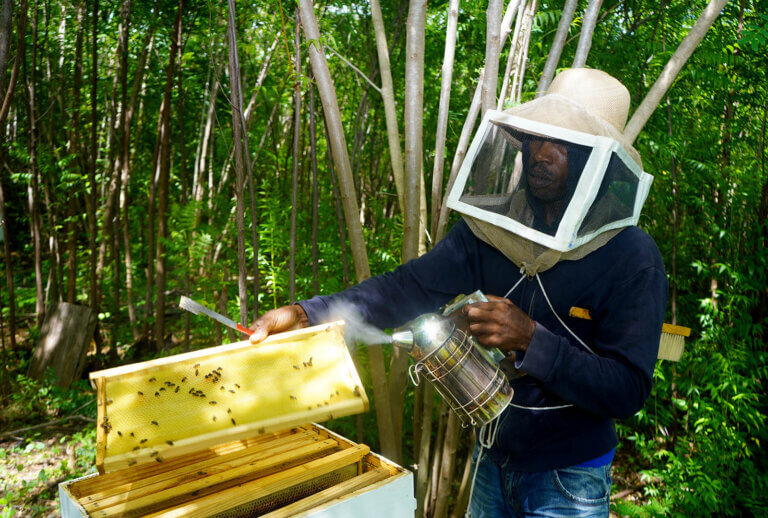
Another day, program staff teach these students the practical day-to-day tasks of the job, from donning the protective bee hood to using a smoker to calm the bees, to harvesting the honey. All of this, mind you, isn’t theoretical. Our participants do it all hands-on. If they’re going to run their own hives, they need to know how to do the work for themselves.
Finally, our beekeepers-in-training learned how to process the honey they collected so it can be safely sold to the local community.
Most of our participants had no prior experience before joining the program, but that didn’t stop them from taking the leap. Our program, with each lecture and hands-on working day, got them up to speed quickly.
“I did not know how these beehives were made before, but now I understand how they are constructed. Now I am able to handle the materials, and for that, I would like to thank CORE very much,” said Jean Florence.
Hear From François
“We received training on how to enter the apiary, how to harvest, and how to work with the bees. Yes, it provides an additional source of income; as you can see, we are now working in the apiary,” said François.
“Not only did we receive training in modern beekeeping techniques, but we are also no longer struggling.”
And training was just the start. Through our program, we gave each beekeeper-in-training the tools and equipment they need to get started. They received all the essentials: a bee smoker, a hat with a veil, gloves, a bee box, an active hive, and more.
This isn’t charity; it’s empowerment. We’re helping these Haitians unlock a new path forward. One in which they will do the hard work day in and day out to keep going. With this head start and detailed education, they’ll be well on their way.
What are the Other Benefits of Beekeeping in Haiti?
Mangroves. Heard of them? They’re one of the most important ecological anchor species worldwide. Mangroves serve as an excellent carbon sink. They offset four times more carbon than tropical forests.
On top of that, mangroves create a rich ecosystem for all kinds of coastal fish, which, if allowed to thrive, can provide a valuable food source for local communities. Plus, mangroves act as a natural barrier. Their extensive root systems can protect coastal towns and villages from storm surge, and they can help prevent erosion from intense storm runoff.
Unfortunately, mangroves often remain at risk. They face pressure from a changing climate, and economic factors also take their toll. When people struggle to make ends meet, they may turn to mangrove destruction. You see, mangrove trees can be turned into charcoal, which is in constant demand in Haiti, not only to help people keep warm at night, but also for cooking.
RELATED | LEARN MORE ABOUT MANGROVE WORK IN HAITI
So, when programs like this happen, they provide economic stability, which reduces the need to use mangrove trees for charcoal. Plus, more bees mean more pollination, and more pollination means happier and healthier mangrove trees that do so much for their coastal home. It’s a win, every which way you look at it.
Where You Come In
Haiti still needs your help. This program is changing the lives of 50 Haitians. Each one and their families now have less financial strain in their daily lives. They have a steady income, which helps them pay for housing and food. It also puts them in a better position to respond and stay safe when a disaster, like a hurricane, strikes.
Donating to CORE directly impacts the lives of countless Haitians. If you’re able, it would mean the world to us. If you’re not able to today, please follow us on social media to stay up to date on the latest from our programs.