

OUR SUPPORT ACROSS
Brazil
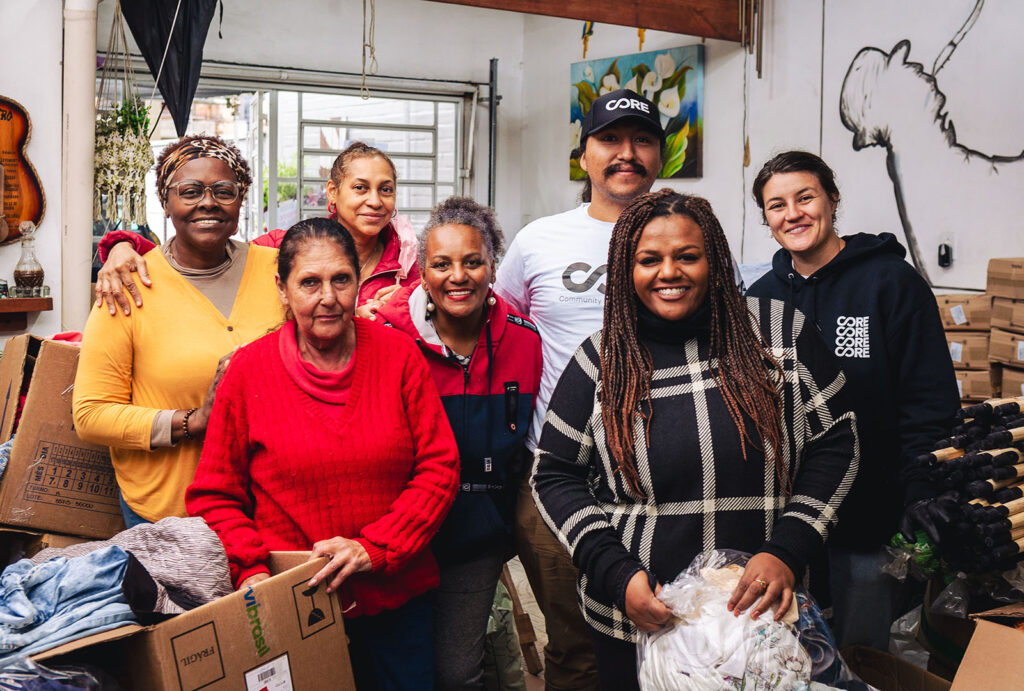
CORE’s work in Brazil and across the globe is made possible by your generous support. Together, we are creating a brighter, more equitable future.
CORE began working in Brazil in 2021 to support equitable distribution of the COVID-19 vaccine and protect the populations being hit hardest by the pandemic. In 2022, CORE responded quickly to provide urgent humanitarian relief to vulnerable communities impacted by a series of devastating floods and landslides in Bahia and Petrópolis. Our team remobilized in 2024 to respond to historic flooding in Rio Grande do Sul.
As our work in Brazil continues, CORE has coordinated with vulnerable communities in the Amazon to support their resilience to the increasing impact of climate change in the rainforest.
OUR RESPONSE
RIO GRANDE DO SUL
Brazil Floods
5,6 million
people reached
2,000
resources distributed
What damage did the 2024 Brazil floods cause?
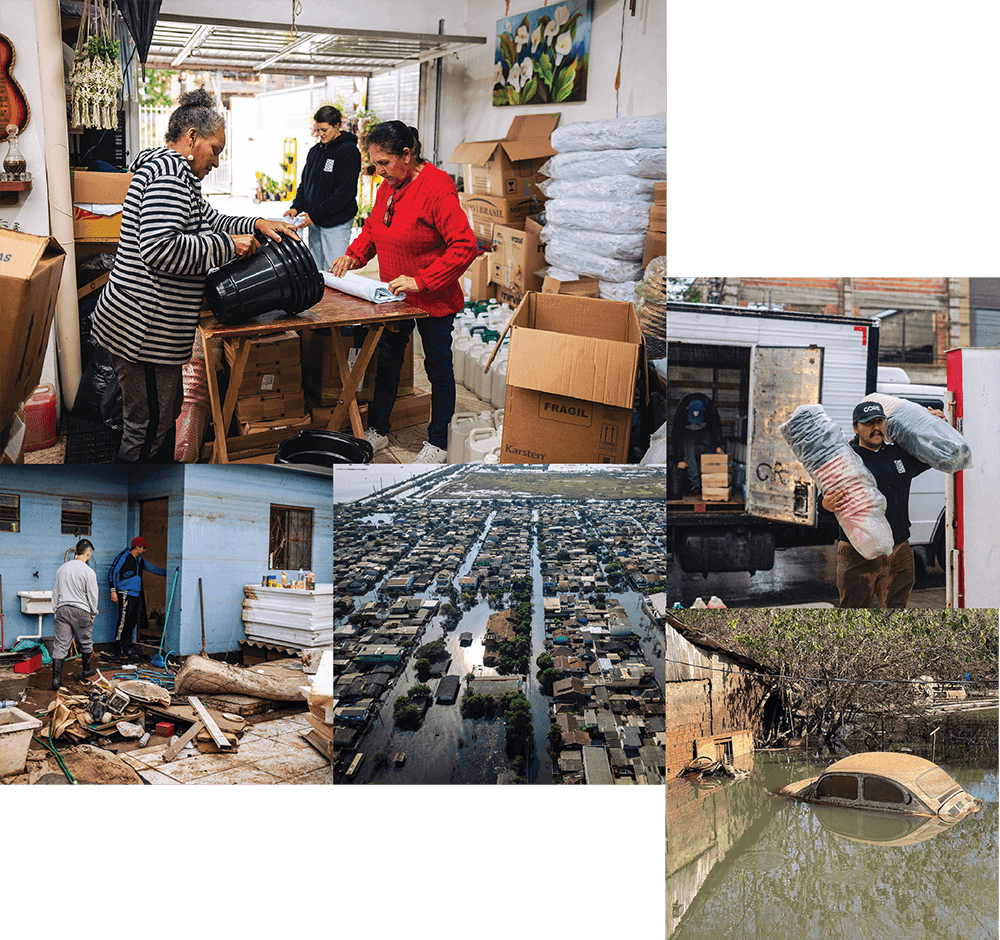
In May 2024, torrential rains triggered catastrophic flooding in the state of Rio Grande do Sul in southern Brazil that wiped out vital infrastructure including roads, bridges, water, and electricity. Clay-colored water rushed into homes, buildings, and businesses, impacting over 2 million people and leaving nearly 600,000 displaced.
This devastating storm was the fourth major environmental disaster to hit the region in the last year, leaving residents exhausted and with limited time and resources to sufficiently rebuild and recover.
How did CORE help after the floods in Brazil?
CORE mobilized to support local government and enhance the efforts of the many community leaders, volunteers, and organizations that led the initial emergency response in neighborhoods surrounding Porto Alegre .
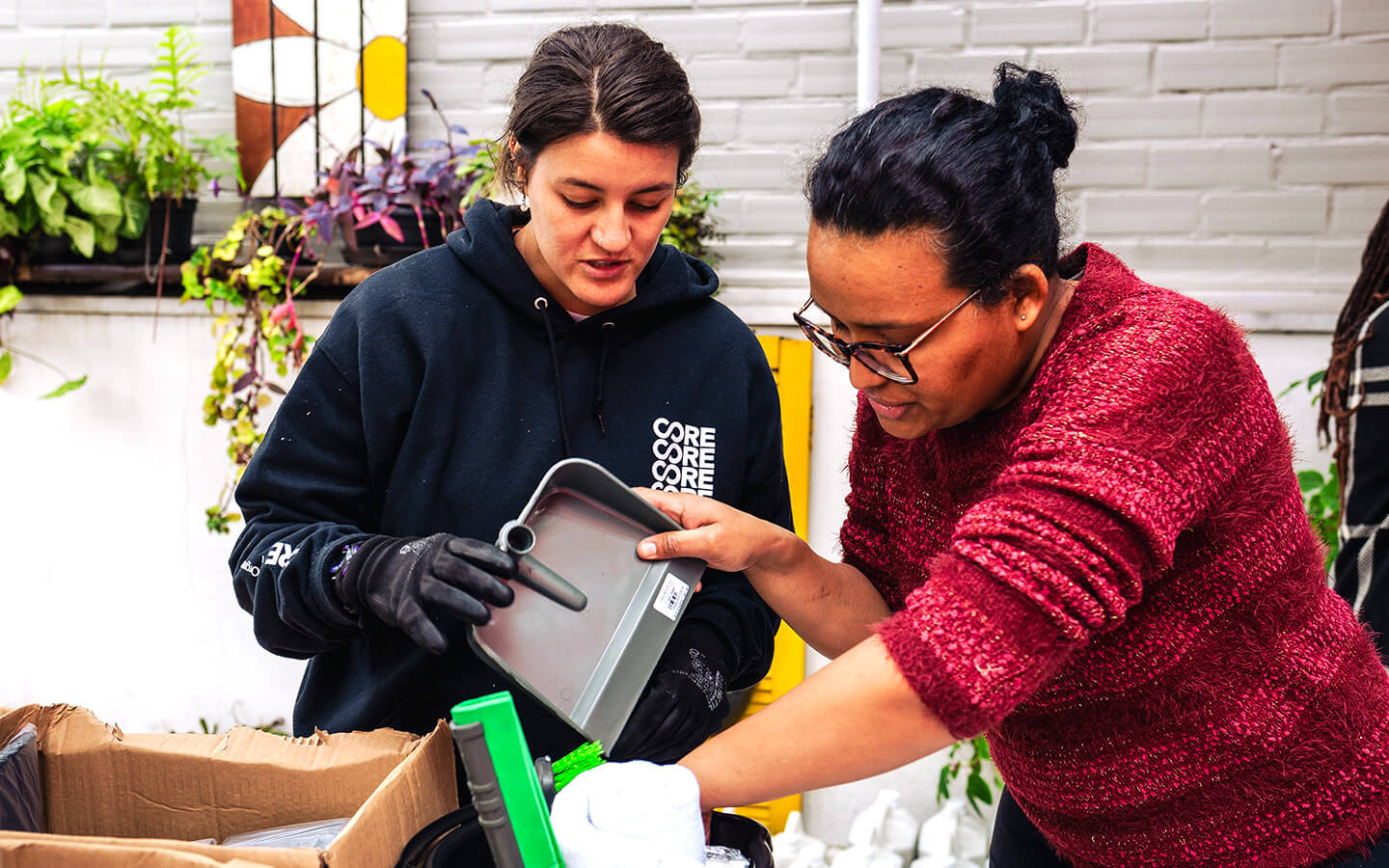
In close coordination with our partners, we distributed cleaning, hygiene and food kits; baby supplies and menstrual pads; and helped with home clean-up assistance for families who had lost everything.
Throughout the year, CORE continued working with local organizations to address both immediate and long-term needs of BIPOC and lower income communities, including Haitian migrants living in the area. We provided cash vouchers to families to rebuild their homes and buy mattresses and other vital resources like food and hygiene items. In partnership with Brazilian Haitian Organization and a local psychologist, our local staff also facilitated talking circles where community members shared about, and health from their experiences.
Meet Semara.
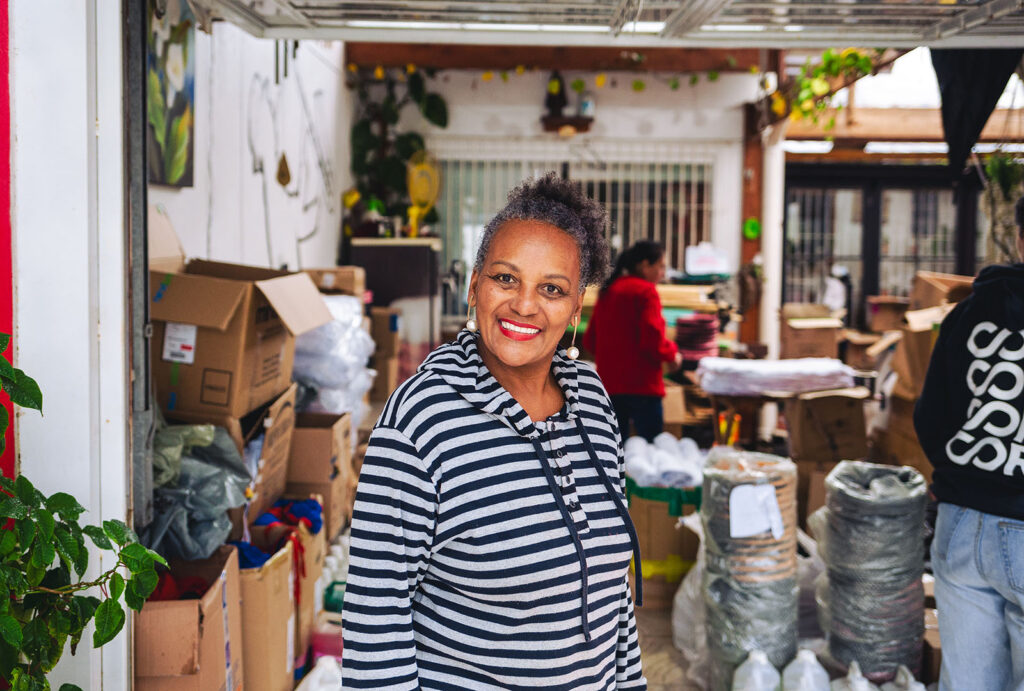
Semara, a resident and community leader in Canoas, graciously offered up her home as a base for relief supply distributions in the immediate aftermath of the floods. CORE was lucky to connect with her and help reinforce her efforts. Together in her home, we assembled and distributed hygiene and cleaning kits to impacted families.
Read more about the community members that helped Brazilians recover from the floods.
“Every day I am thankful because I thought I was going to do good for one, two, three families, and today, for sure, we have already helped more than 500 families…And with each passing day, thanks to God…there are angels, like the people from CORE, who come here to help us.”
CRAI Rio, Migrant and Refugee Support Hub
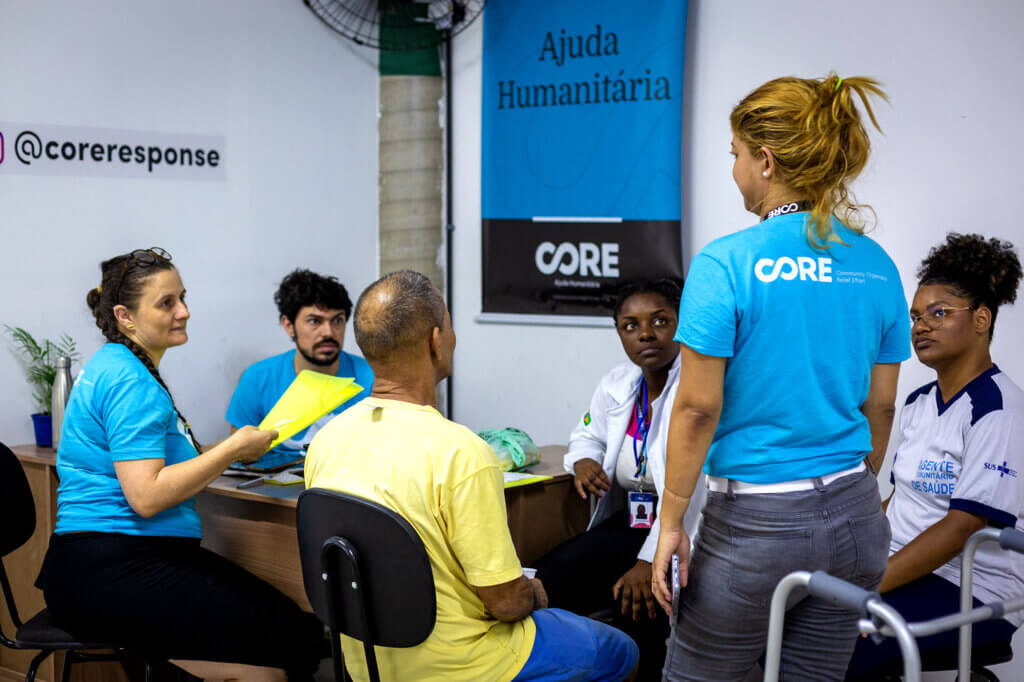
In collaboration with UNHCR and local officials, CORE launched CRAI Rio in 2023 to support recently arrived immigrants, refugees, and stateless persons with a myriad of services, including temporary shelter, legal assistance, social assistance, psychosocial support, vouchers for food assistance, Uber rides to support clients’ transportation to reach referred partners, digital inclusion activities and Portuguese language classes. While operating under CORE’s management, CRAI Rio served more than 200 people.
Bahia & Petropolis
Brazil Floods
8,5 million
pounds of debris removed
4,100
hygiene kits and
essential resources distributed
What caused the floods in Brazil?
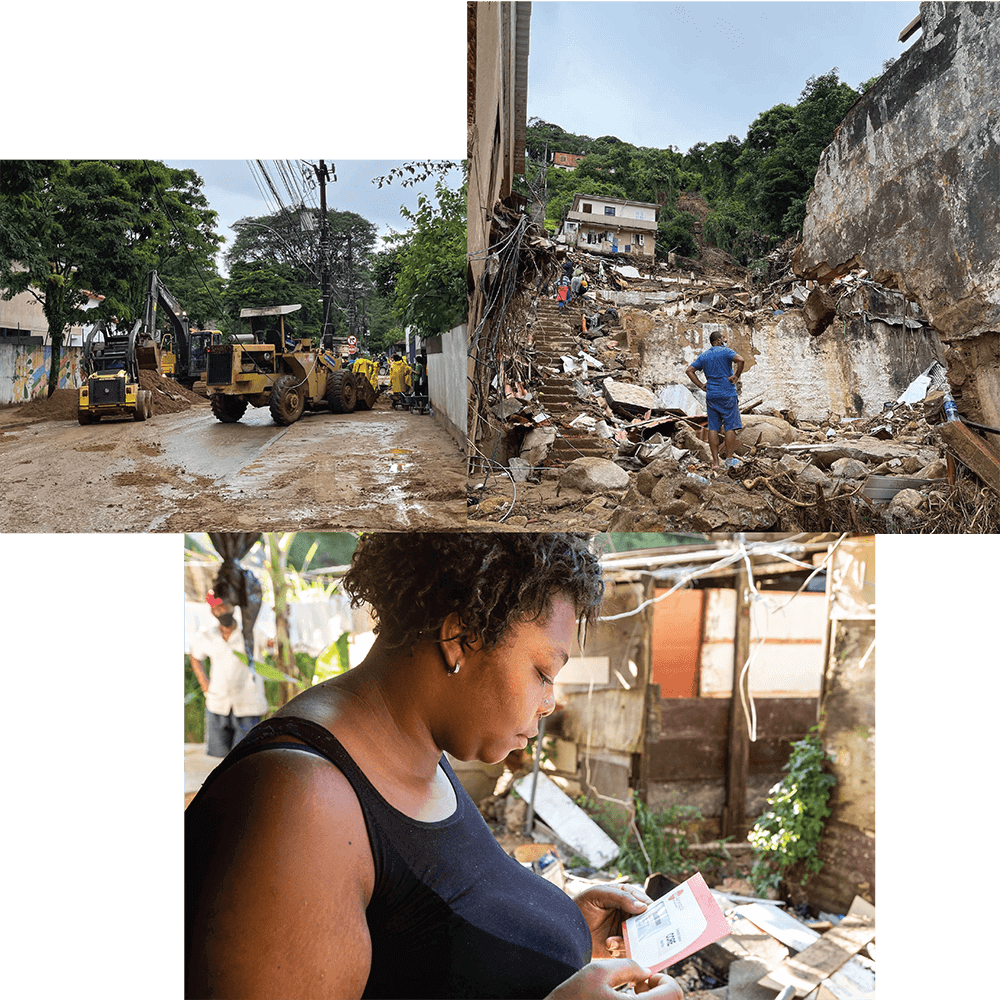
In December 2021, record rainfall fell on the state of Bahia in the northeast of Brazil resulting in one of the state’s worst disasters. The floods resulted in over 300 casualties and displaced60,000 people, many of whom lost all their possessions.
A few months later in February 2022, the city of Petrópolis in the mountains outside of Rio de Janeiro received a rare deluge of rain that caused severe flooding and landslides, killing over 200 people, displacing thousands, and decimating homes, cars, and Petrópolis’ infrastructure.
How did CORE help after the floods in Brazil?
CORE quickly coordinated with local partners in Bahia to provide those most impacted, including marginalized Indigenous and quilombola (Afro-Brazilian) communities with essential resources that included family-sized hygiene kits, pressure cookers, and mattresses.
When the floods and landslides devastated Petrópolis, CORE’s team in Rio de Janeiro rapidly mobilized to assess urgent needs and fill gaps. We distributed family-sized hygiene and cleanup kits, supported 1,000 displaced individuals with cash assistance, and cleared 8.5 million pounds of debris .
RIO DE JANEIRO
Brazil COVID-19 Response
420,000
vaccines administered
200,000
tests administered
What was the COVID-19 situation in Brazil?
Brazil was a hotspot for COVID-19 throughout the pandemic, leading South America in deaths and cases. In 2021, the rollout of the vaccine was met with a variety of challenges, which led to low vaccination rates and left vulnerable populations at severe risk.
How did CORE provide COVID-19 relief in Brazil?
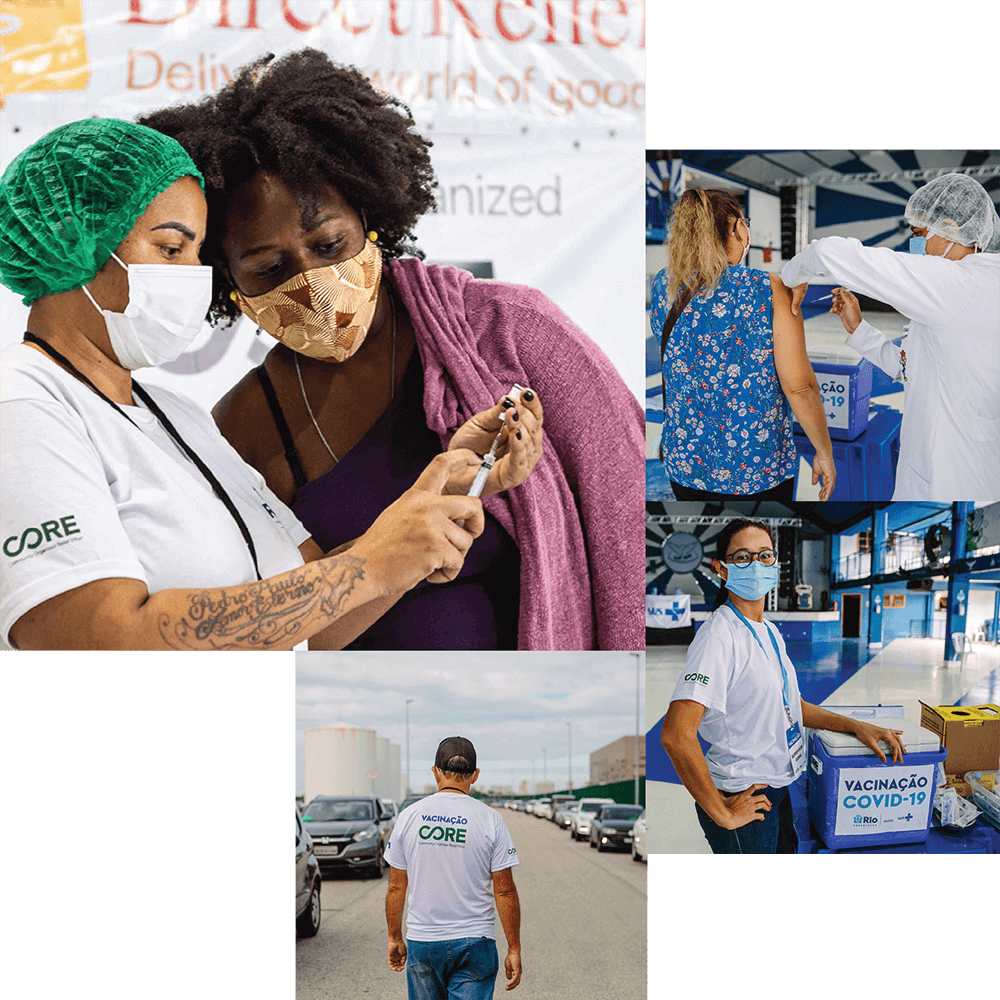
CORE partnered with Viva Rio, the City of Rio de Janeiro, and the Ministry of Health to administer 420,000 free COVID-19 vaccinations and 200,000 tests to communities in Rio de Janeiro, targeting the most vulnerable and hardest hit populations.
We also teamed up with Rio’s Youth Secretary to collect and distribute 17,000 pounds of food items. CORE worked with Viva Rio to provide pregnant and lactating mothers living in low-income communities with food vouchers, supporting over 8,000 families.