CORE responded to Hurricane Isaias, the first Atlantic hurricane of the 2026 season
After an unusually quiet Atlantic hurricane season, Hurricane Isaias made landfall in the Florida panhandle in October 2026 as a Category 2 storm. Heavy rain and hurricane-force winds damaged homes and businesses, brought down trees and power lines, and caused widespread flooding across Florida, Alabama, and Georgia.
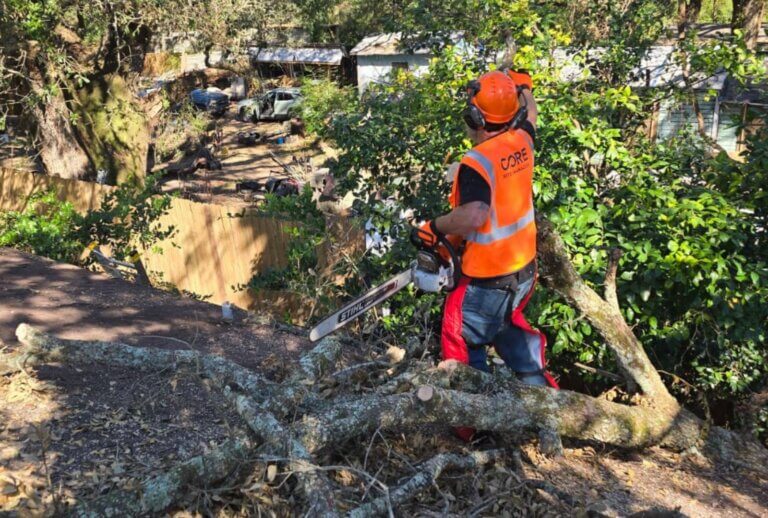
Our emergency response team mobilized right away. While our team lead headed to Pensacola, Florida to assess the damage and connect with impacted communities, CORE volunteers in Georgia loaded trucks with generators, chainsaws, and dozens of tarps and headed down to Florida.
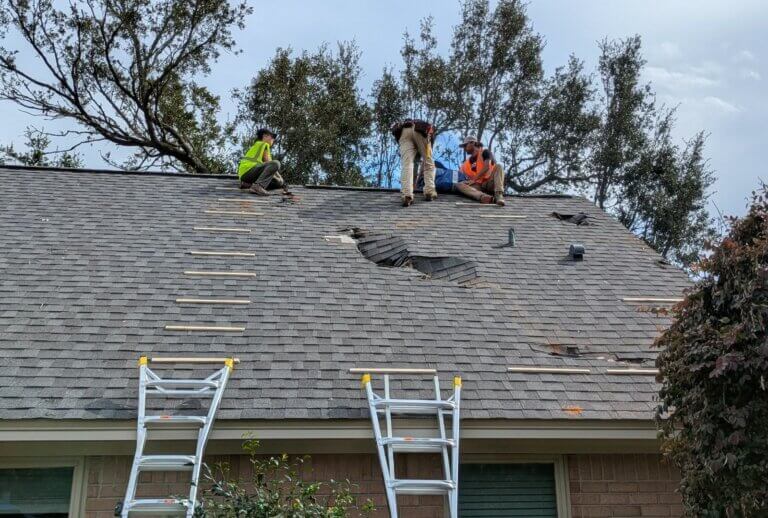
Door-to-door home assessments showed us that many people in Pensacola were living in damaged homes. Fallen branches left gaping holes in roofs, and with more rain on the way, families were exposed to the elements and additional water damage. Most didn’t have the tools or resources to clear leftover debris or make repairs, and some had nowhere else to stay.
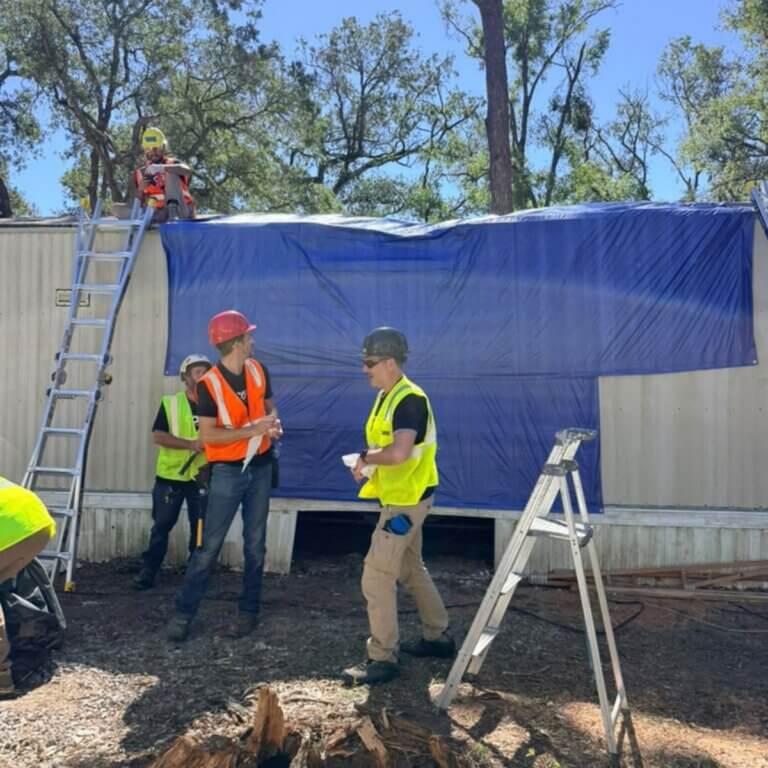
So, we got to work tarping homes. Timely tarping is critical after hurricanes. It keeps people safe, protects their homes from further leaks, and gives them some peace of mind while they figure out what comes next.
It also saves families money. By stopping water damage early, tarping can head off costly roof and interior repairs, which is a real relief in communities hit by storm after storm. Because the work is also labor-intensive, we prioritized helping community members who are elderly, uninsured or living with physical disabilities, and anyone with nowhere to stay but their own damaged home.
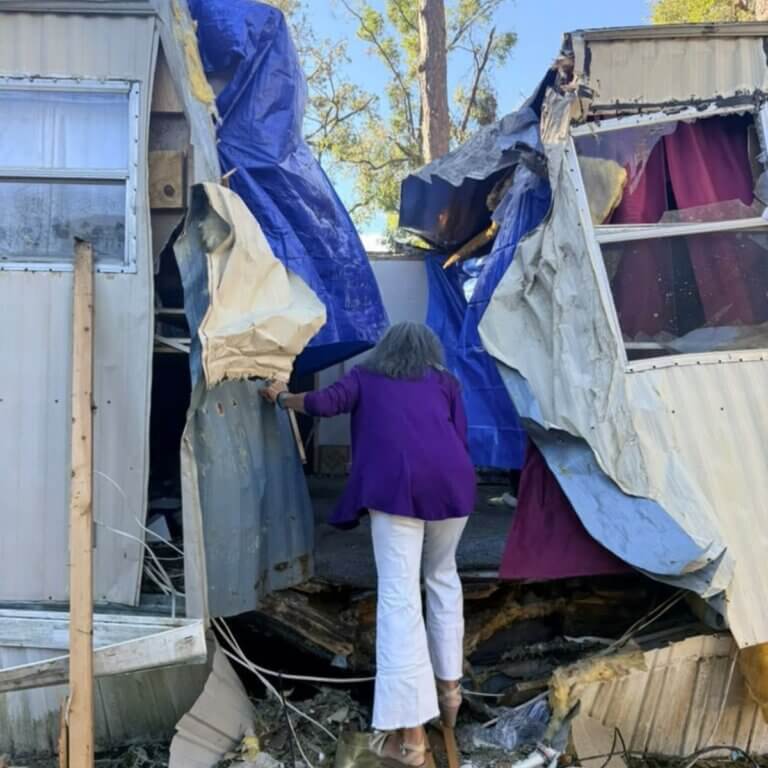
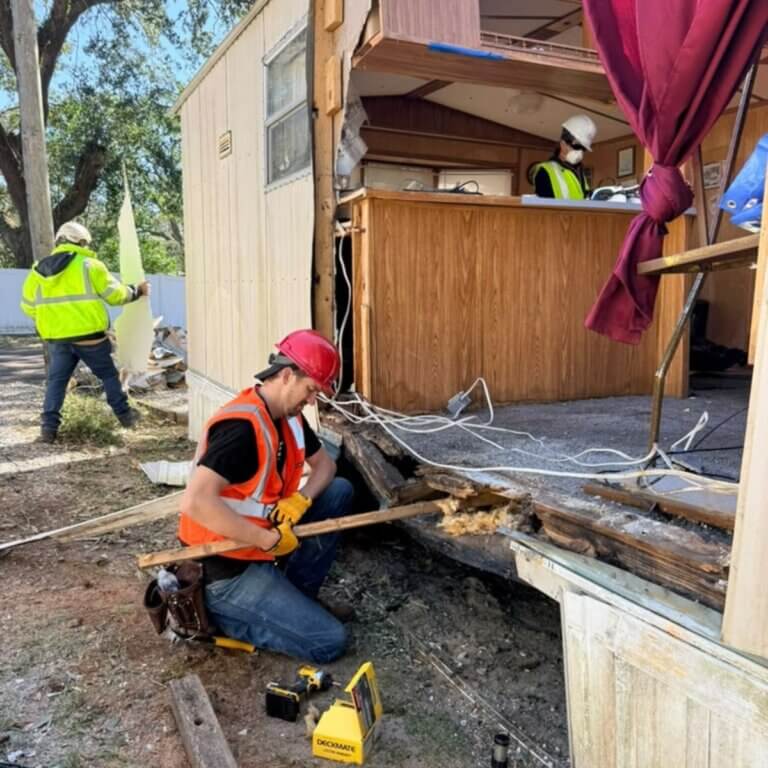
Take Miss Betty, who lives in a mobile home park outside Pensacola. Hurricane Isaias sent a nearby tree crashing through her trailer. Thankfully, she wasn’t hurt, but, in an instant, the heavy trunk split her home into two. On one side sat her bed, a couch, and framed pictures still hung on the wall. On the other side, she had her kitchen.
Our team started by clearing all the broken branches and other debris in and around Miss Betty’s home. Then, we secured tarps around the entire trailer to seal off any open spaces to ensure the space was enclosed and Miss Betty could stay safe inside. It’s a temporary fix, but, for many, it’s the stopgap they need while they work out a longer-term plan.
RELATED | Stashauna’s Story: Navigating Loss and Recovery After Hurricane Melissa
In all, our team helped more than 55 people after the storm, saving those residents about $434,000 in repair costs combined. We don’t take that lightly. For communities hit by disaster again and again, every dollar saved matters, because rebuilding storm after storm isn’t sustainable. And at the end of the day, nothing matters more than being able to sleep safely in your own home.
In Florida and around the world, we want to be ready to show up for communities whenever disasters like this strike. That’s why we set up CORE’s Emergency Response Fund, which ensures our team can continue to support the rapidly changing needs of communities in crisis without interruption, and help them build resilience in the face of future disasters.