CORE Helping Rural Fishing Communities in Jamaica Reclaim Lifeline
Across Jamaica, Hurricane Melissa ravaged homes, roads, hospitals, and everything in between. The Category 5 hurricane, which made landfall in October 2025, broke records as the strongest storm to ever directly hit the island nation. Torrential rain, storm surge, and sustained winds up to 185 mph left many rural communities in western Jamaica completely isolated – and for those right on the water, like Parottee, the impacts reached even deeper.
Fishing as a lifeline
Parottee is coastal fishing village in St. Elizabeth Parish. Unlike nearby towns like Treasure Beach, where residents earn a living from a mix of fishing, farming, and tourism, Parottee’s fishers depend almost entirely on their catches to put food on the table, send their children to school, and provide for their families.
When Melissa’s powerful winds and torrential rain destroyed their boats, traps, engines, and other fishing equipment – and blocked the roads into town – they lost both their income and ability to get much-needed support from neighboring islanders practically overnight. For weeks, Parottee was reachable only by boat, cut off from electricity and nearly all outside food and clean water.
Once it was safe, CORE’s team, packed into a small motorboat alongside partners from Breds Treasure Beach Foundation, cruised into the community just as more rain set in. Community members joined us as we carried jugs of water and dry food supplies like flour and beans from the boat to the shore.
But the question on everyone’s mind went beyond immediate relief: How will we fish?
Facing a new reality
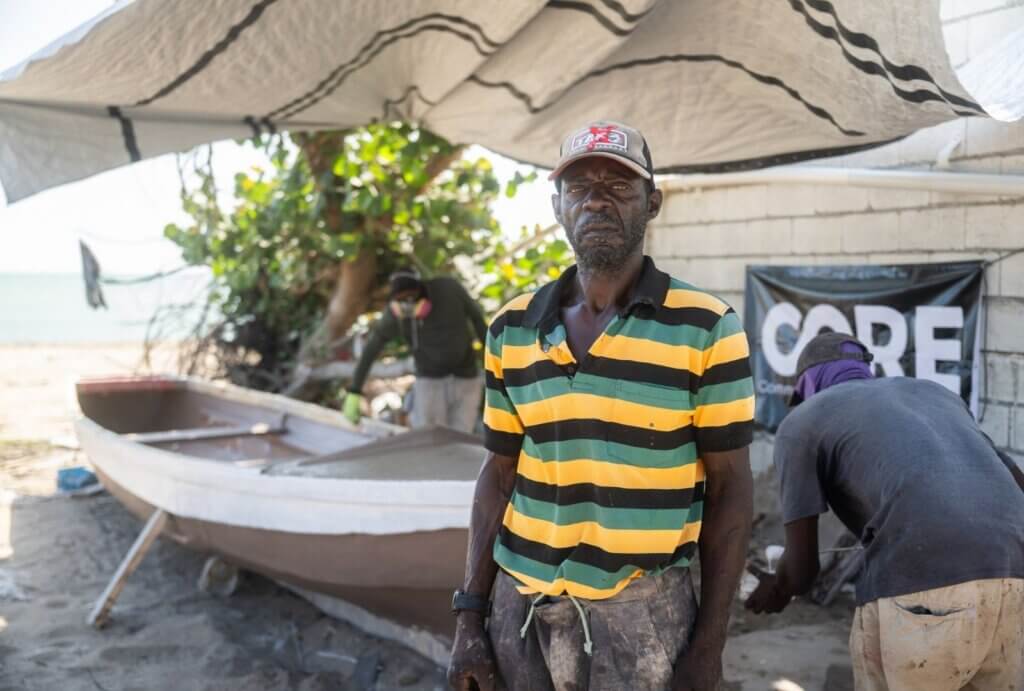
Hilbert, a dad, grandpa, and lifelong Parottee resident, cried when he saw his beloved boat, Trying Man, splintered apart. He’d caught fish, lobsters, and conches for a living, selling his haul at a market to support himself, his daughter Tash, and her children. Tash put it simply: “The money he earns catching fish helps every one of us. Sometimes he catches like 40 pounds of lobster. When he goes and sells it, it’s like, ‘Here daughter, this is yours, go buy a drink. Here granddaughter, this is yours.’”
After Hurricane Melissa, Hilbert had no idea where he’d find his family’s next meal, let alone the money to fix his boat. He tried piecing the broken hull back together, but when he went out on the ocean, water flooded in.
That’s when Dennis, the Breds Treasure Beach Foundation Director, first spotted Hilbert. He watched as Hilbert desperately scooped water from his boat as it seeped in from beneath him. The situation was dangerous, so Dennis flagged Hilbert down and insisted he come in. Shortly after, Dennis came to CORE with the idea of a community boat repair program, and together we got to work.
Repairing Trying Man
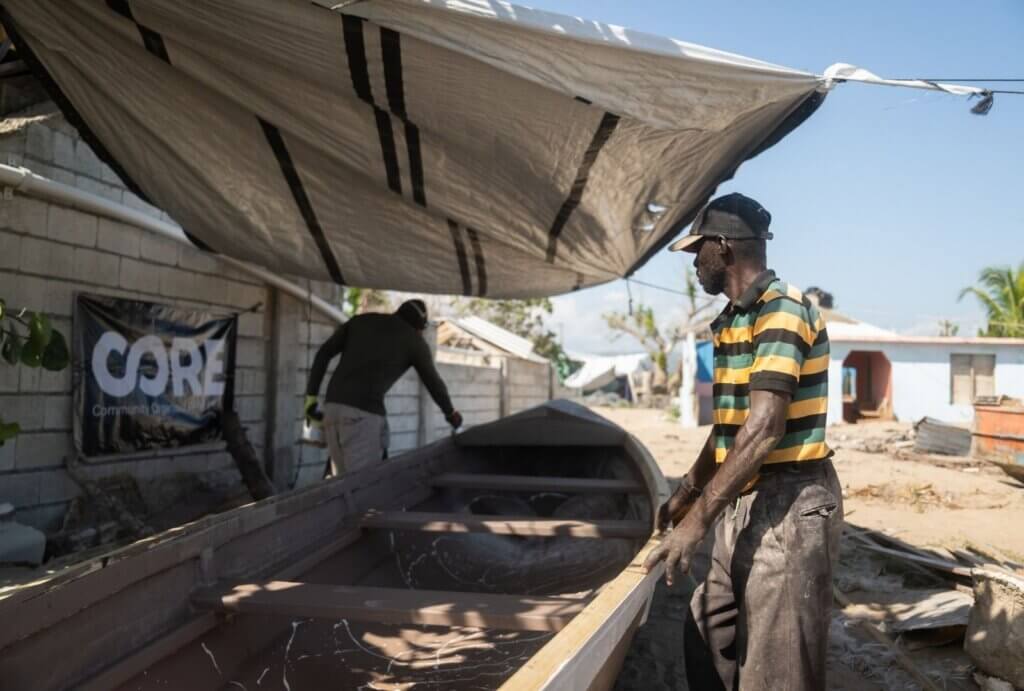
We hired local experts to restore boats for Hilbert and other fishers across the community. The work is meticulous; they patched holes, lined the bottom of the boat with mesh and fiberglass, added new seats for stability, and replaced splintered wood along the boat’s edges.
RELATED | STASHUANA’S STORY: NAVIGATING LOSS AND RECOVERY AFTER HURRICANE MELISSA
“The name of this boat is Trying Man,” Dennis shared, “And today, as I said to Hilbert, this is not trying man, this is doing it, because of CORE and Breds.”
How You Can Help
For Hilbert, getting his boat back meant taking the first step toward getting his life back. But his story is one of thousands still unfolding across Jamaica. For many, the road to recovery remains long and uncertain, especially as the region enters another threatening hurricane season.
CORE’s local team is still on the ground, supporting families through vital projects like boat repairs, cash assistance, and debris removal. If you would like to support this mission, please visit our our response page to donate and learn more about current needs on the ground.