

Explaining Cash Assistance and Answering Some Common Questions
Put yourself in the shoes of someone who’s just lost everything. For the past several days, you’ve moved around from shelter to shelter, booth to booth, distribution to distribution, just trying to collect the things you need to get by for the next few days. You’ve received warm blankets and some donated clothes, and you’ve been able to eat.
But even with all of this going on and your life being turned upside down, you know the everyday doesn’t stop, and you still have to pay the bills.
Last month’s credit card payment is due, along with your utilities bill. Now, you find out that one of your family members doesn’t have their medication, and you need to find a way to get to the pharmacy to pay for it. You’re strapped for cash, and this nightmare feels endless. What do you do next? For many, that answer is anything but clear.
At CORE, we’ve been responding to all kinds of disasters around the world for the past 16 years, listening, learning, and acting on what communities tell us are their most pressing needs. One of the most important and innovative tools in our response toolkit has been Cash and Voucher Assistance, also known as CVA or simply Cash Assistance.
Why is Cash Assistance Helpful?
Flexible
It allows people to buy exactly what they need, like the right size of diapers or a specific medication.
Fast
We can transfer funds digitally even when roads are blocked or bridges are down.
Empowering
Cash In Practice
Cash assistance is flexible because it allows individuals to act in their own best interests. Yes, things like blankets, clothing, or hygiene kits with toothbrushes and soap are important and essential during a disaster response, but, like everything, they have limits.
For example, what happens when someone arrives at their third resource center and finds that organizations are handing out the same items they’ve already received at their first stop, or that there aren’t the right-size diapers for their infant?
CORE uses cash assistance to address gaps in this traditional form of support, and most importantly, the timely needs of people. And in these dire times, we believe those who’ve been affected by disaster know their needs better than anyone else.
Did you know?
Studies have found that for everyone $1 of cash assistance, the support can generate $2 to $2.5 in local economic activity. This means that with cash assistance, CORE can help jump start the local economy after a disaster.
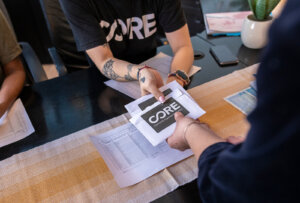
Cash assistance can also make an immediate impact in hard-to-reach places. After an earthquake or hurricane, or during a conflict such as the war in Sudan, physical goods, like blankets, canned food, or bottled water, may have difficulty reaching an area.
Say, for example, a road washed out, or a bridge collapsed. Cash assistance, on the other hand, can be distributed remotely or by a small team deployed to the affected area.
How do I know that Cash Assistance goes to those in need?
How do I know they’ll spend Cash Assistance on the right things?
Some might be concerned that those who receive cash assistance are spending their money on unnecessary things, or what some have called “temptation goods,” like alcohol or cigarettes. Rest assured, it occurs very infrequently.
In fact, a study published in the peer-reviewed journal Economic Development and Cultural Change found that people who received cash assistance were less likely to spend on these temptation goods.
We understand the concern, but stand by the data and what we’ve seen ourselves during our over a decade of cash assistance experience. Those who receive cash assistance, in their time of despair, spend the funds responsibly on what they need most.

“It’s like a little security blanket, you know, and it does, you know, really give you that, that flexibility to use it where you want.”
Kim, cash program participant
Here’s CORE’s Commitment to Cash Assistance and Helping Those in Need
In 2025, CORE gave $5.6 million in cash assistance across the globe. Each dollar has made a direct impact on someone’s life. We’re proud of this work and the lives we’ve changed. Unfortunately, we know that there will be more disasters this year and in the years to come.
RELATED | Learn how CORE used cash assistance during the LA wildfires>>
With your continued support, we’ll remain on the front lines wherever disaster strikes, addressing gaps in care and serving those most in need. We’ll continue using cash assistance as one of the most important tools in our response toolkit.
If you’d like to keep up to date with our life-changing work, consider signing up for our newsletter here, or if you’re able, donate to fuel our emergency response fund.